
An Ozone Generator, also called an ozonator, turns Oxygen (O2) into Ozone (O3). The models on this page are small, adjustable units built for ozone therapy applications and fed with pure oxygen. They are a different kind of machine from the room Ozone Generators sold for air cleaning.
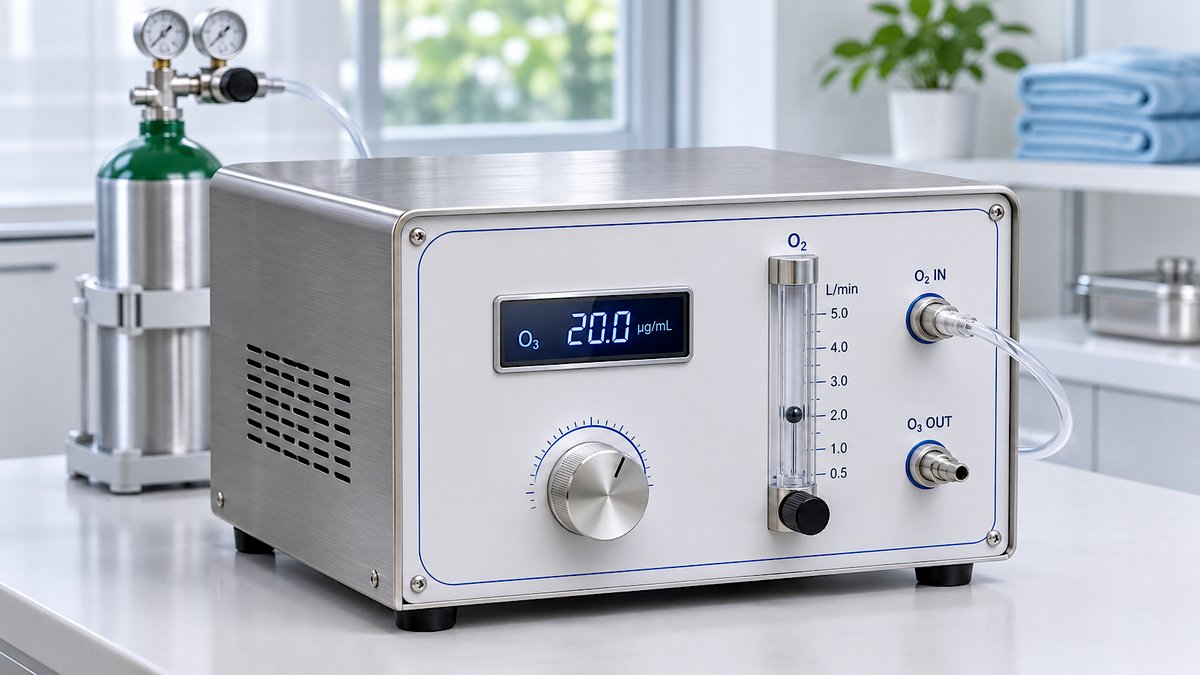
Ozone Generators compared
| Model | Ozone output | What sets it apart |
|---|---|---|
| O3Elite Mini | Up to 70 µg/mL | On/off unit with a ceramic cell. You set the concentration through the oxygen flow rate alone. The lowest-priced O3Elite. |
| O3Elite Single | Up to 70 µg/mL | One ceramic cell with an adjustment dial. |
| O3Elite Dual | 2 to 100 µg/mL | Two independent ceramic cells. The maker recommends it for ozone saunas and other high-heat uses. |
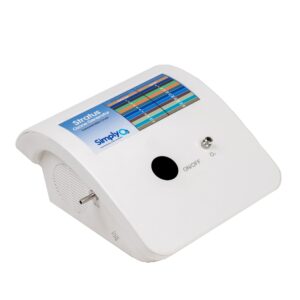
| Stratus 3.0 | 5 to 75 µg/mL, 11 settings | Quartz glass and titanium, with a built-in ozone destruct. Designed for home users. |
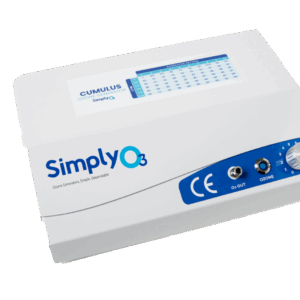
| Cumulus | Up to 60 concentrations, from the chart supplied with each unit | Double-wall quartz reactor, set by dial and oxygen flow. The maker’s choice for professionals. |
Figures are the manufacturers’ own, checked in November 2026. All five product pages list a lifetime manufacturer’s warranty.

How an Ozone Generator works
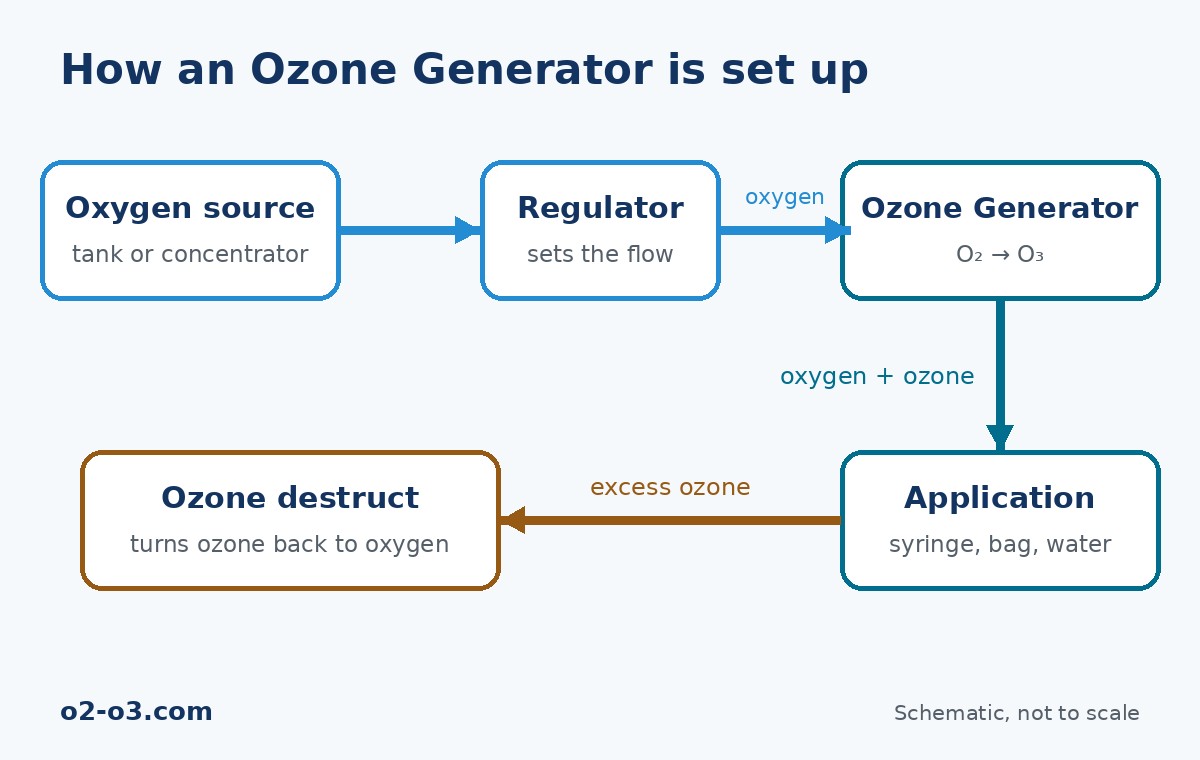
Oxygen flows from a tank or concentrator through a regulator and into the generator. An electrical discharge inside the ozone cell splits some of the O2 molecules, and the freed atoms join other O2 molecules to form O3. What comes out is a mix of oxygen and ozone, not pure ozone.
The strength of that mix is given in micrograms of ozone per milliliter of gas (µg/mL), which sellers also call “gamma”. On these models you set it with the generator’s setting, the oxygen flow rate, or both, using a chart.
Ozone soon turns back into oxygen, so it cannot be stored for long and is made at the point of use.
Types of Ozone Generators
The main division is between high-grade generators, which make a concentrated ozone-oxygen mix from pure oxygen, and air purifiers, which release small amounts of ozone made from room air. Here you can see a detailed comparison.
| High-grade Ozone Generator | Ozone air purifier | |
|---|---|---|
| Purpose | An ozone-oxygen mix for wellness, research and other precise uses | Cleaning and deodorizing the air in a closed space |
| Input | 99.9% oxygen | Room air |
| Method | Corona discharge in a ceramic or quartz cell, as in all five models above | Usually an ionizer, UV light or an electrostatic precipitator |
| What comes out | A concentrated mix with an adjustable strength | Low levels of ozone mixed with whatever is in the air |
| In use | The ozone stays in a closed system of tubing and containers | People, pets and plants leave the space, which is aired out before they return |
The two are not interchangeable, and we warn against converting an air purifier for uses that need pure ozone. For air cleaning, see our ozone air purifiers.
Among high-grade generators you will see two cell designs. PromoLife uses ceramic, which it says disperses heat better and keeps the output stable, while agreeing that glass and ceramic are both inert in ozone. Simply O3 uses quartz glass. Simply O3 says the differences between the leading makers are small from the customer’s point of view.
Which oxygen source do you need?
A high-grade generator runs on pure oxygen, not room air. Air is about 78% nitrogen, and running it through a generator gives a mix of ozone with oxidized nitrogen products, humidity and pollutants. Most generators and kits do not include oxygen, so plan for it when you budget.
- Oxygen tank with a regulator. Tanks are rated at 99.9% oxygen. The regulator sets the low flow the generator needs, and it must match your tank’s valve, which differs between countries. Check your country in our European regulator list or Simply O3’s guide for outside North America.
- Oxygen concentrator. It makes oxygen from room air, so there are no tanks to refill. PromoLife offers concentrators for ozone use with a low-flow meter. Simply O3 recommends a tank instead, because a concentrator gives 90 to 95% oxygen and is harder to hold at very low flow rates. If you choose one, make sure it goes down to at least 1/4 liter per minute.
An oxygen generator or concentrator only supplies the oxygen. You still need an Ozone Generator to turn it into ozone.
What to check before you buy
- Ozone-resistant materials. Every part that touches ozone must resist it, or it breaks down and contaminates the gas. Simply O3 recommends glass, silicone, titanium and stainless steel, and warns against natural rubber and most other metals.
- Concentration range and accuracy. Check that the range covers what you plan to do, and that the unit comes with a concentration chart so you know what each setting delivers.
- Ozone destruct. This converts excess ozone back to oxygen so you do not release it into the room. The Stratus 3.0 has one built in, and on other units it is an accessory to budget for.
- Voltage. If you may move the unit between countries, choose one rated for 110 and 220 V.
- Warranty terms. Read the exclusions before you buy. Check how long the warranty runs, what it covers and who pays to ship the unit for repair. Damage caused in use, such as dropping the unit or liquid flowing back into it, can be excluded.
Safety
Ozone in the air you breathe is dangerous to the lungs and eyes. High-grade generators are designed so the ozone stays in a closed system and does not reach the room air. Keep every connection tight, use ozone-resistant parts, never breathe the gas directly, send excess ozone through a destruct, and follow the manufacturer’s instructions.
Ask a qualified healthcare professional before starting any ozone therapy.
Common questions
What concentration do I need?
It depends on the application, so follow the protocol from your healthcare professional. As a guide to the equipment, PromoLife says 70 µg/mL covers most uses except high-heat ones such as ozone saunas, where it recommends 100 µg/mL. Simply O3 says home users rarely need the top of the Stratus range except for a sauna.
What else do I need besides the generator?
An oxygen source, a regulator or low-flow meter, ozone-resistant tubing and the accessories for your application, such as those for ozone insufflation. Kits such as the Stratus 3.0 Home-User Kit and the Comprehensive Ozone Package group these accessories together, but the oxygen itself is usually extra.
Contact us with questions about choosing an Ozone Generator.
This page provides general information and does not replace an individual medical assessment.